impactmania’s keynote on AI for Leadership, in Estonia
AI is here and reshaping our daily lives. The key question is: how and to what extent is AI actually transforming our lives?
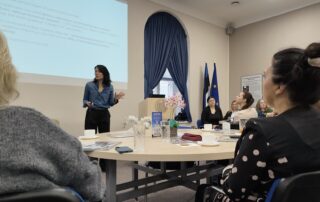
AI is here and reshaping our daily lives. The key question is: how and to what extent is AI actually transforming our lives?

The most alarming learning? impactmania's tests showed that AI hiring tools such as Application Tracking Systems (ATS) often favor the least experienced candidates over top (educated and experienced) people. It’s clear that human biases and historical data play a big role in this — and how the machine learns over time. We would fool ourselves to say that algorithmic hiring is based solely on merit.

The most alarming learning? impactmania's tests showed that AI often favors the least experienced candidates over top (educated and experienced) people. It's clear that and plays a big role in this and how the machine learns over time. Achieving equity requires more than just unbiased AI.

However, the overriding key recommendation we would have is that the AI field should diversify itself. A diverse and inclusive AI talent pool, especially from under-represented communities would anticipate and build a more equitable system. This will require investment in education, mentorship, and access to opportunities. Only then will we have an environment where sophisticated systems are created by people that represent our union.
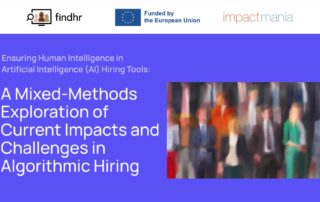
impactmania is named an expert on algorithmic hiring for the FINDHR group which consists of European universities such as Erasmus University in Rotterdam and the University Pompeu Fabra in Barcelona and organizations such as AlgorithmWatch and Max Planck institute.
Widespread hiring practices including algorithmic hiring tools screen out many qualified candidates and artificially constrain the talent pool that companies consider, essentially “hiding” prospective workers. We conducted qualitative and quantitative experiments to test algorithmic hiring tools such as Applicant Tracking Systems (ATS).
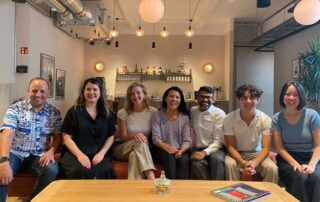
European initiatives such as this provide critical insights and avenues supporting disadvantaged populations, especially migrant women who are dealing with undervalued societal positions. A group continuously facing limited – or loss of opportunities, this while their new home countries require capable and competent workers.