Paksy Plackis-Cheng: The Interviewer Interviewed
Since International Women's Day was held on March 8, it's appropriate that Paksy Plackis-Cheng is featured this month! - HR Living Magazine

Since International Women's Day was held on March 8, it's appropriate that Paksy Plackis-Cheng is featured this month! - HR Living Magazine
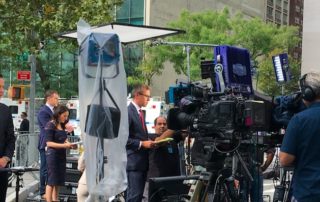
When I was the senior broadcast producer at 20/20, long before the #Metoo movement, correspondent John Ferrugia then the lead investigative reporter at Denver’s KMGH-TV uncovered sexual assaults of female cadets at the U.S. Air Force Academy in Colorado Springs. With additional reporting, John brought the local story to 20/20 to reach a larger national audience. The outcry from the story initiated Congressional hearings and a leadership change at the Academy. Also there are now sex assault officers/teams on most U.S. military bases around the world as well as at all the service academies.

The reason why Lensational’s intervention has gained traction is that we were really specific. In the beginning, we were looking at women who are illiterate or who can't express themselves, because of systemic discrimination. We did not just focus on any women.
In these orientations, the domestic migrants are told that they will likely not get a day off; they will not have an access to Internet or a cellular phone. They are told that they will be over-worked and isolated. They're told that they're probably going to get raped. That there will be moments when they want to jump off a balcony and kill themselves.

impactmania's interviews have been featured at the UN, cited by international media, U.S. Consulate, and many other organizations. Our interview with the Berlin Philharmonic Digital Media was already cited in a report by the Harvard Business School and now is also part of a book published by Cambridge Scholars Publishing!
What we have settled on is that there seems to be two things: traumatic migration experience; refugees have higher risk of disorder than economic migrants. Second, the pre- and post-migratory social context, for example, people's loss of social status—when people go from a good job to being a cleaner after migration.

Sometimes they’re educated, sometimes they’re not, but they’re all human beings with lives and stories. Nobody leaves his or her country unless there’s a reason to. You don’t do it just because the US is the best country in the world. You do it because there’s something that’s making you leave.