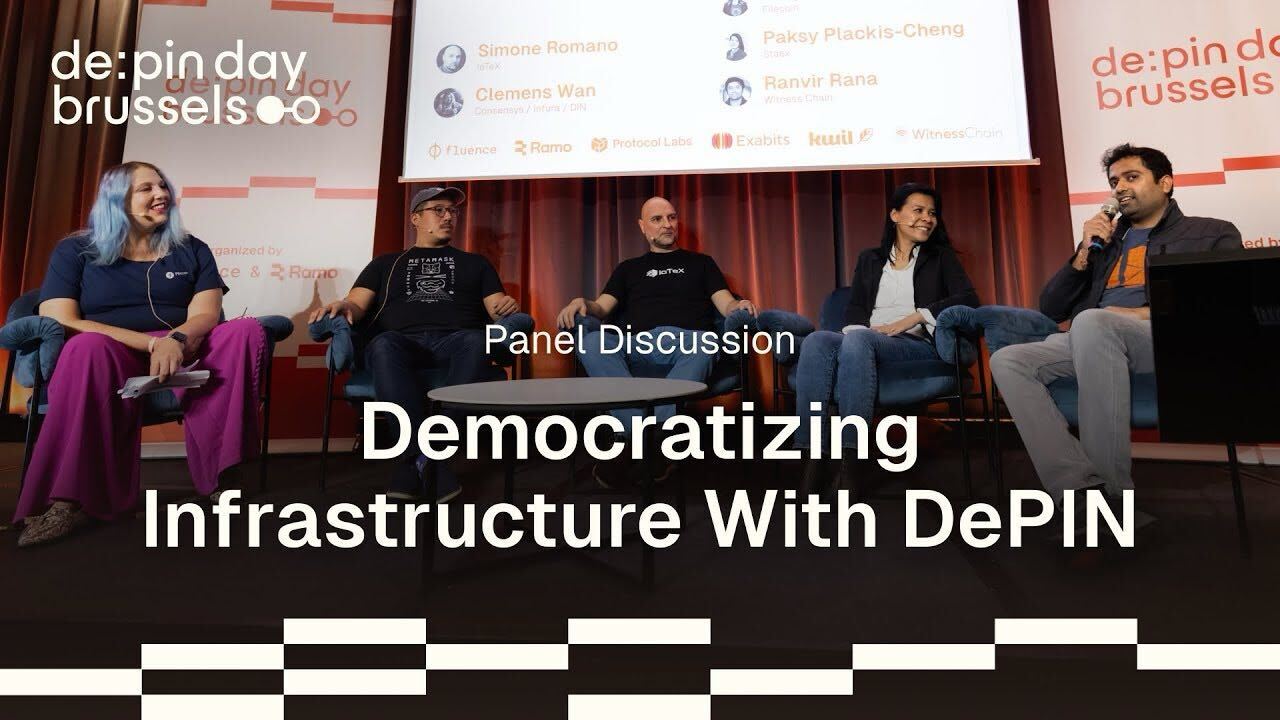
After DePIN Day Berlin it is DePIN Day Brussels: Advancing Decentralized Physical Infrastructure (DePIN)
During the panel, Paksy Plackis-Cheng emphasized the importance of Applied Web3 projects, such the Staex Web3 Drone Corridor project she led as accelerating the DePIN space across various industries and sectors.
Paksy also highlighted a critical issue: some current “successful” projects have primarily benefited their initiators rather than the broader community that helped build them. This trend contradicts the core ethos of Web3.
Lately, there are many similar technological approaches that are addressing identical use cases and competing for the same developer market, particularly in community sharing of resources like WiFi, compute, and storage.
For us to accelerate Web3 adoption, we need to collectively address the following.
While innovative technology is imperative, true transformation requires:
• Integration with real-world digital and physical assets
• Development of broad, inclusive, vibrant ecosystems
• Establishment of clearer industry standards
To move beyond a niche technological play, we need stakeholders who focus on creating robust ecosystems that include diverse participants across various sectors. Therefore, Paksy created a public-private consortium to integrate, test, and demonstrate solutions allowing all involved nine parties to play a role bringing in value in a new collaborative system where trust is built in thru Web3 tools such as metadata on the blockchain, smart contracts, and automated payments.
Personal highlight of DePIN Day Brussels? The welcoming and open-minded atmosphere, coupled with recognition of ‘s unique value proposition in this space.
As we move forward, let’s focus on collaborative efforts, across industries and sectors, that commit to and embody the decentralized and community-centric spirit of Web3, ensuring that the benefits of DePIN matter to the public-at-large.